
Bajaj Finserv, ICICI Bank, Nestle, UltraTech Cement, Bajaj Finance, Maruti, Tata Consultancy Services, IndusInd Bank and State Bank of India were the major laggards. Infosys, JSW Steel, NTPC and Power Grid were the gainers.

Bonuses are typically commensurate with deal activity in any given year. Investment banks, on average, pocket 2-3 per cent as fees for managing an IPO and 1.5-2 per cent for handling QIPs.

Equity benchmarks declined on Thursday after a two-day rally, mirroring a weak trend in the US markets and fresh foreign fund outflows. Weak US consumer data and hawkish comments from the Fed's policymakers dragged markets lower. The 30-share BSE Sensex dropped 187.31 points or 0.31 per cent to settle at 60,858.43.

Nikunj Saraf, Vice President Choice Wealth, answers your queries.

Having exposure to international funds and gold is a must for those who have foreign currency-denominated goals.
.jpg)
The country's 44 fund houses together had an average AUM of Rs 9.85 lakh crore during April-June quarter of 2014-15, up from Rs 9.05 lakh crore (Rs 9.05 trillion) in the preceding three months, according to the latest data available with Association of Mutual Funds in India.

Among the Sensex firms, Asian Paints, NTPC, Tata Motors, Bharti Airtel, State Bank of India, Larsen & Toubro, Wipro, Tech Mahindra, Tata Consultancy Services, ITC, HDFC Bank and Maruti were the biggest winners. Hindustan Unilever, Infosys, UltraTech Cement, Bajaj Finance, Nestle, Axis Bank, Reliance Industries and HDFC were among the laggards.

'Stick to FDs of shorter tenures, preferably one-two years.'

Investors across age groups and risk appetite can invest in these schemes.
The Sensex ended over 51 points lower on Monday while the Nifty settled flat amid a weak trend in global markets and continuous foreign fund outflows. Markets are awaiting the November inflation data to be announced later in the day, traders said. The 30-share BSE Sensex declined 51.10 points or 0.08 per cent to settle at 62,130.57. During the day, it tumbled 505.52 points or 0.81 per cent to 61,676.15. The broader NSE Nifty ended at 18,497.15, marginally higher by 0.55 points.

Nikunj Saraf, Vice President Choice Wealth, answers your queries.

Tata Consultancy Services (TCS), the group's biggest cash generator, overtook Vedanta to become the highest dividend payer in India in FY23. The IT services major paid Rs 42,090 crore for FY23, up 167.4 per cent from Rs 15,738 crore for FY22. The 10 biggest payers together shelled out Rs 2.06 trillion for FY23, more than double the Rs 98,371 crore for FY22.

From the Sensex pack, NTPC, Tata Motors, Titan, Larsen & Toubro, Reliance Industries, IndusInd Bank, Infosys, HDFC Bank and Power Grid were among the major gainers. Wipro and Tech Mahindra were the laggards.

Domestic equity markets, which are at record high levels, will be driven by quarterly earnings, global trends and foreign fund movement, analysts said. The movement of rupee and global oil benchmark Brent crude will also be tracked by investors. "The direction of global stock markets, fluctuations in the rupee-to-dollar exchange rate, and movement in crude oil prices will all play a crucial role in influencing the overall market trend.

Kotak Bank was the top gainer in the Sensex pack, rising over 3 per cent, followed by IndusInd Bank, Bajaj Finance, HDFC Bank, ICICI Bank, Bajaj Finserv, Maruti and SBI.

Benchmark stock indices Sensex and Nifty closed with losses in a choppy trade on Thursday as investors preferred a cautious approach ahead of inflation and industrial production data to be released later in the day. Unabated foreign fund outflows also hit the investor sentiment. The 30-share BSE Sensex declined by 147.47 points or 0.25 per cent to settle at 59,958.03.

Mutual funds, as experts and custodians of another set of retail investors' savings, play a speculative game they are neither supposed to nor equipped to do, cautions Debashis Basu.

Investors became poorer by over Rs 4.47 lakh crore on Friday as markets faced severe drubbing, mirroring weak trends in global equities. The 30-share BSE benchmark dived 866.65 points or 1.56 per cent to settle at 54,835.58. During the day, it tumbled 1,115.48 points or 2 per cent to 54,586.75.

The number of deals announced in the month were the highest ever at 102 for any month, compared to 75 in the same period last year and 92 deals in March.

'To ensure you remain with the better performers, you need to consistently monitor your MF portfolios and weed out the non-performers, even if they are from a star fund manager or a fund house with a sound record.'
Falling the second consecutive session, equity benchmark Sensex dropped over 140 points on Friday, tracking weakness in banking and energy stocks amid a mixed trend overseas. Investors also remained concerned over persistent foreign fund outflows, traders said. The 30-share BSE index ended 143.20 points or 0.24 per cent lower at 58,644.82. Similarly, the NSE Nifty shed 43.90 points or 0.25 per cent to close at 17,516.30.

Among Sensex stocks, SBI, IndusInd Bank, HDFC Bank, Axis Bank, HDFC, Tech Mahindra, ICICI Bank, Ultratech Cement, L&T, Bajaj Finserv, Reliance, HCL Tech, Asian Paints, Wipro and M&M were the major losers. On the other hand, HUL advanced the most by 1.14 per cent. Maruti, Tata Steel, NTPC and Sun Pharma also posted gains.

Equity benchmark Sensex and Nifty ended marginally down on Tuesday tracking losses in metal, banking and financial stocks. Investors also remained concerned over persistent foreign fund outflows, traders said. Falling for the fifth consecutive session, the 30-share BSE index ended 37.70 points or 0.07 per cent lower at 57,107.52. Similarly, the NSE Nifty shed 8.90 points or 0.05 per cent to close at 17,007.40.
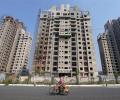
Banks are not allowed to lend to developers for purchasing land parcels.

PFRDA will invite bids to appoint pension fund managers.

Tech Mahindra was the top loser in the Sensex pack, shedding around 3 per cent, followed by Infosys, HCL Tech, SBI, Kotak Bank and HDFC. NSE Nifty plunged 231.10 points to 17,374.75.

The Reserve Bank of India's (RBI's) latest order on unsecured loans is set to hit the banking sector's growth in the near-term, cautioned analysts, as they see banks slowing down on aggressive retail lending. Besides, cost of funds for non-banking finance companies (NBFC) is expected to inch up as banks will pass on higher capital charge to NBFCs. "We believe the fallout of the RBI action will be mainly on growth, given the rising dependence on unsecured retail loans and lending to NBFCs for growth.

Simply put, asset allocation entails holding a portfolio comprised of various asset classes like equity and debt, among others. Over longer time frames, asset allocation can help investors protect their portfolios on the downside and create wealth as well. Powered by investments in both equity and debt, balanced funds qualify as asset allocation tools. The debt component in balanced funds can insulate the investor's portfolio from the volatility in the equity markets.

Benchmark indices rallied on Friday with the BSE Sensex climbing over 390 points to settle above the 56,000-mark amid fresh buying by foreign funds and largely positive global market trends. Intense buying in banking and finance counters also drove the indices higher. Rising for the sixth straight session, the 30-share BSE benchmark jumped 390.28 points or 0.70 per cent to settle at 56,072.23.

Equity benchmark Sensex rallied 515 points on Thursday to reclaim the 59,000-level, propelled by heavy buying in IT, banking and financial stocks amid sustained foreign fund inflows. The 30-share BSE index ended 515.31 points or 0.88 per cent higher at 59,332.60. Similarly, the broader NSE Nifty gained 124.25 points or 124.25 per cent to close at 17,659.

Importantly, is there hope going forward?

Only NIIF has stayed the course as a viable infrastructure financing institution.

Equity benchmarks nosedived on Friday, with the Sensex crashing 866.65 points to close below the 55,000-mark amid a sell-off in global markets. Unabated foreign fund outflows and firm crude oil prices also weighed on sentiment. The 30-share BSE Sensex dived 866.65 points or 1.56 per cent to finish at 54,835.58.
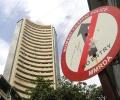
Because of local and global problems, inflation pressures may continue, helping these schemes perform better.
IndusInd Bank was the top loser in the Sensex pack, shedding around 5 per cent, followed by Kotak Bank, HUL, Titan, Bajaj Finserv and HDFC. NSE Nifty plunged 263.20 points to 16,985.20.

HDFC was the top gainer in the Sensex pack, rising around 3 per cent, followed by Bajaj Finance, HDFC Bank, IndusInd Bank, PowerGrid, UltraTech Cement, TCS, Tech Mahindra and L&T. On the other hand, ONGC, Maruti, Tata Steel, HUL, Bajaj Auto and Sun Pharma were among the laggards.

Swift gains on Dalal Street this year have also led to a sharp surge in shares of equity market intermediaries like depositories, exchanges, and registrar and transfer Agents (RTAs). The stock prices of BSE, CDSL, CAMS, and KFin Technologies are up 24-283 per cent so far in 2023 when compared to a 9 per cent rise in the benchmark Nifty index. With the market buoyancy expected to keep up the pace, analysts believe these stocks are a good long-term bet despite the sharp rally, which can trigger an intermittent correction.

Inflation data, both at domestic and global level, interest rate scenario in the US, geopolitical situation and general elections in 2024 are some of the major factors that would influence trading in the equity market this financial year, analysts said. Besides, foreign fund trading activity and global trends will also dictate terms in the equity market going ahead. Equity markets across the globe faced major challenges in FY23 due to concerns over high inflation, which resulted in increase in interest rates around the world, lowering investor sentiment, experts added.

Investors' wealth eroded by over Rs 4.90 lakh crore on Friday amid a sharp fall in equities. The 30-share BSE Sensex tanked 1,020.80 points or 1.73 per cent to settle at 58,098.92. During the day, it tumbled 1,137.77 points or 1.92 per cent to 57,981.95. The market capitalisation of the BSE-listed firms plummeted by Rs 4,90,162.55 crore to Rs 2,76,64,566.79 crore on Friday.

Neelesh Surana, who manages Mirae Asset Tax Saver and Mirae Asset Emerging Bluechip, remains constructive on Indian equities from a three to five-year time frame.
